Cultivating Wonder: A Conversation with Aimee Nezhukumatathil
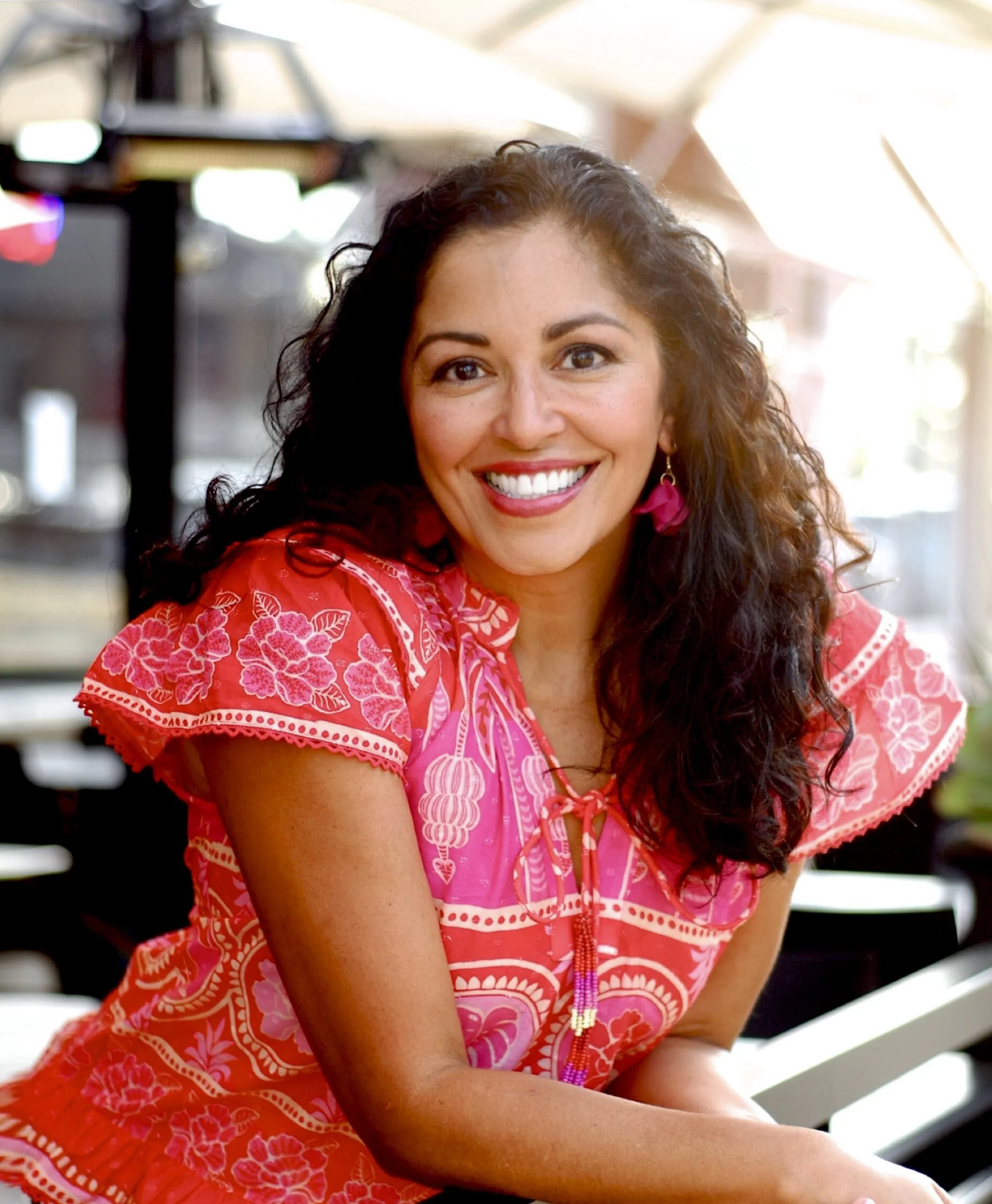
Aimee Nezhukumatathil is the New York Times best-selling author of the poetry book, Night Owl (Ecco, 2026), and two illustrated collections of essays, Bite by Bite and World of Wonders: In Praise of Fireflies, Whale Sharks, & Other Astonishments, which was chosen as Barnes and Noble’s Book of the Year and named a finalist for the Kirkus Prize. She also wrote four previous award-winning poetry collections: ) Oceanic, Lucky Fish, At the Drive-In Volcano, and Miracle Fruit. With the poet Ross Gay, she co-authored the chapbook Lace & Pyrite, a collaboration of epistolary garden poems. Her writing appears twice in The New Yorker, The Nation, the Best American Poetry Series, The New York Times Magazine, ESPN, Poetry magazine, American Poetry Review, and The Paris Review.
Honors include a poetry fellowship from US Artist Fellows, the National Endowment for the Arts, the Pushcart Prize, a Mississippi Arts Council grant, and a Guggenheim Fellowship. For a decade, she served as the poetry editor for Orion and Sierra magazines. A professor of English and Creative Writing for over twenty five years, she also serves as a firefly guide for Mississippi State Parks.
On May 6th, 2026, The Interlochen Review editors Ema Bekic, Romeo Caterino, Emmy Chen, and Alisha McMillan sat down to talk with Aimee about the use of natural themes in poetry and nonfiction, as well as the blending of memory and movement.
Emmy Chen: Your writing often blends nature, memory, and identity. How do you decide which personal experiences carry enough significance or depth to be transformed into an essay or poem?
Aimee Nezhukumatathil: In the drafting stage, I don't know what's going to happen. I like to go back to that quote of Robert Frost who says, “no surprise for the writer, no surprise for the reader.” I usually start with an image. An image also can be any of the five senses. I know we're taught so much that it has to be visual, but it can be sonic. It can be a taste, a texture, a smell.
I try to recreate that as precisely as possible, and when I say precision, I mean with similes, metaphors, and music, that's when I'm like, “Okay, I didn't realize this was about my father or this is about being the only brown girl in a sea of white faces.” I never start off [by saying], “today I'll write [about] nature, or today I'll write about racism.” I'd say 99.9% starts with the image and then I see where that takes me.
Ema Bekic: When writing about family, how do you decide what is appropriate to have in the poem or essay and what you should keep private?
AN: The boys that I wrote about, or the babies I wrote about earlier, are now fifteen and eighteen. My eldest is coming home from his first semester of college and my youngest is a sophomore. I appear in their AP literature books. I can't imagine exactly what they feel, so I don't want to speak for them, but I know they are both proud and also a little embarrassed. For my eldest, the one poem of mine that was in his AP textbook was a love poem to my husband, his dad.
If they get mentioned, I run it by them. There's nothing that's in print that they didn't see first, at least, since they could read. And even before then, I always asked myself, “Would I have wanted this if my parents were writers?” My husband is a writer as well, so they have the weight and the joy of having two writers observe them. I don't have a prescription for everybody, but what works in my family is that if they know they're going to appear in a poem or essay, they get dibs on it first. To this day, they’ve never asked me to take anything out.
EB: In Oceanic, in poems where childhood memories appear, such as “When I am Six,” there's often this tension between innocence and hindsight. How do you write from both perspectives at once?
AN: I try to remember the images that I would be drawn to as a kid—I still have a decent memory of that time. What connects us all, where I can almost time travel, is that I'm still at core the same girl. I don't hide in department store racks. I don't hide from my kids.
I would say the images are what connect my past self to my present. The same images still delight me and make me curious. Even though the “looking back” moments have a different perspective and a different awareness and wisdom, the things that I'm drawn to, and the things that I'm drawing the reader's eye to, are the things that made me get excited in the first place. I'm still that nerd who would almost drive off the road because I saw a bird.
Jade Rothbaum: In Bite by Bite, you manage to create this system of memory that lives and breathes like its own organism. When you write about the past, how do you balance so many moving pieces?
AN: I do what I call margin-to-margin writing. I truly don't know if it's going to be a poem or an essay, but I just go margin-to-margin and I handwrite all my drafts first. There are actually scientific studies that [show that] your brain processes things a little bit differently. You get wilder metaphors or leaps. You can access parts of your memory that maybe you wouldn't.
Revision is where all the play and the really heavy thinking goes [on]. There's a short essay about mint, the plant. It was going to be about how it's so unruly; it's all over the place in my garden. I made the rookie mistake of not planting it in a container. If you don't know, mint just spreads like crazy. It's like a weed. It's a beautiful fragrance to have in springtime, but you'll never get rid of it because the roots go sideways.
As I was drafting this, I was thinking, this is a botanical essay. I [didn’t] know if it was going to be for Bite by Bite. I wrote it during the pandemic. Then my mom popped in. Before I knew it, it ended up being about missing my mom. If someone were to say, “Aimee, write an essay about missing your mom,” I would have said, “No, I can't.” Especially in 2020. I would have thought it was too cheesy. But I had to write around it, to start with mint. And I noticed she kept coming up. Her smell. She always chewed this mint gum. All of that was in the rough draft, and that's how it's fun. I don't think of it as a chore. I think it's fun to find, why is this person recurring? Why is this image recurring? And to shape it all in the final draft.
Alisha McMillan: Speaking of movement, in a majority of your writing, there's always a sense of movement. Rarely do your poems or essays feel very “still.” When writing a bigger project, a collection of essays or a poetry book, how do you keep that momentum going?
When writing, do you ever get stuck? If so, how do you overcome that?
AN: An image will leap into something else. You see a squirrel on campus and that reminds you of the color brown or what happens on Thanksgiving. Then suddenly, you're right behind your grandmother as she's cooking. You go from squirrel to grandmother's cooking. You have to guide the reader along so that they're with you and you don't lose them.
I like books that make me feel like I have traveled without ever leaving my chair. I'm very conscious of that when I'm revising. I want you to feel like you're in Interlochen now, but before you know it, you are in downtown New York City trying a miracle fruit with me.
Your reader won't follow you if you don't care about your reader. I hope what people can see in all my books is that I'm not trying to make this mystery so no one knows what I'm talking about. It's a guide throughout my pages, “Hey, come with me.” Hopefully, you feel changed at the end of the essay or the poem, or at the end of the book.
Another way to do that is just to be as specific as possible. To get to the universal, be specific. Oftentimes, my beginner creative writing students are like, “I just want this to be [something] anybody who broke up with somebody can understand.” No one will care if you just say, “I broke up. I hate him. He didn't even like [me],” but the more specific you are, the more people can relate. The more they feel like they've gone through a journey with you.
EC: One of the strengths in World of Wonders is this sense of marvel in difficult memories. How do you balance that beauty with vulnerability in your work?
AN: That's my goal for all of my books, to not shy away from the sadness or grief or anger, but also to, at the end of the day, come down on the side of wonder and astonishment and awe. That's really at the core of who I am as a person.
During the pandemic, Pedro Pascal was trying to show his acting range. He starts out laughing hysterically at something and then he ends up crying. That's me on any given day. It's kind of wild to see his face change from utterly joyous to utterly, devastatingly sad.
That's how I take in the planet. I think it wouldn't be genuine at all if I was like, “Everything's so lovely, everything's great, or everything's terrible.” There are still so many gorgeous, amazing things, beautiful things about the planet. [But] there are also such devastating things that make me furious. I think readers are smart enough that if you were to leave one side out, they would be like, “This is fake, this is too saccharine or this is too much of a bummer.” My goal is to be a guide on this planet and that means not shying away from the good or the bad.
EC: Another question on World of Wonders. Animals and natural imagery usually reflect human emotions. How do you decide on which creature or plant best captures a particular feeling or memory?
AN: I only went with the animal first. I had a list of 200 animals and plants. I just started writing and describing them as clearly as I could. Eventually, things would creep in. Like, narwhals reminded me of a time when my family was alone and we were the only Asian Americans in this small town in Kansas. But I didn't know that going in. Someone would be like, “First thought about narwhals?” I'd be like, “They have a big tooth. They're in the Arctic.” It really wasn't until describing their behavior, which is that they stay together in a pod, [that I got the idea]. If one of them gets lost, the others will circle around and not stop until they find that one again. It's amazing. I didn't know that that was going to be a book, actually. [But] that was my biggest book. It just goes to show, I truly don't set out to write a book—I just try to record things.
For [World of Wonders], that was a book of bedtime stories for my kids. They had questions. And for narwhal, It was the first time [my son] ever heard someone say, “Build that wall,” or “We're going to keep borders up.” Some idiot boys in the school said it to his Latino friend. He truly didn't know. They were chanting, “Build that wall! Build that wall!” One of his best friends is this fantastic class clown, super smart, super funny. Everybody loved him. But as soon as these idiot rednecks said, “build that wall,” he was really quiet. These questions came up at night, and I didn't know how to answer them.
How do I say, “There's a bunch of racist people in the world. Good night.” I was like, “You know, narwhals—because that was his favorite at the time—narwhals always stick together. If one of them gets lost or distracted somehow, or separated, the family will never stop until they get that narwhal back.” That was a way for him to drift off into some sort of peace. We tackled the subject, but I didn't want to end on building walls. I wanted to end on narwhals and things like that. After they went to bed, I would type it up. Eventually, my husband asked to see some of them. He knew I was typing them up, and he's like “What are you doing, Aimee? This is a book.” That's how World of Wonders came out, honestly; it was just answering questions from my boys.
A close reader would absolutely feel a mom's presence, or someone who cares. But in revision, I was imagining, “How do I get my best friend who doesn't read, or doesn't read much, excited about narwhals and a little bit inside of my life?” I love the origin story of that book in particular.
EB: In Oceanic, there's a specific poem called “On Listening to Your Teacher Take Attendance.” There's a lot of vulnerability shown in an ordinary classroom moment. What drew you to that specific scene?
AN: There wasn't one moment. There have been several in my adult life where I'm being introduced at a big event and someone will say “Aimee Alphabet.” Or “Aimee, just come on up, Aimee. You know who you are.” They don't even try with my last name. I get it. I get my last name is long—but if you don't even try, that drives me nuts.
Nezhuku is actually this beautiful flower that grows in South India. And Matathil means house of. This flower is so fragrant. They make shampoos out of it. It's like saying house of jasmine, basically, is your last name. It's so gorgeous. But, I was born here. People can say Tchaikovsky. They can say Schwarzenegger. But they won't try Asian names.
I remember thinking “Let me write back to try to create that moment for little Aimee,” but also as a guide, a gentle nudge to teachers. That poem in particular is passed around at so many teachers' conferences now about the importance of saying names. I did not think “I want this to be in conferences on teaching teachers how to teach.” I wanted to have grace for the kids who get their names mispronounced on the first day of classes, but also a little bit of grace for the kids and the teachers who made fun.
They say in the South, “You catch more flies with honey.” I'm not trying to point fingers, but when you make fun of someone's name, you're making fun of their whole identity. It's a crappy way to start off the first day. But the same way, I'm going to give you grace by remembering even the bullies were babies at one point.
JR: In your writing, you work very closely with the ideas of wonder and attention. Do you see wonder as something to be cultivated, or is it more about removing what dampens it? What do you try to understand that resists being understood?
AN: It definitely needs to be cultivated. One thing I always try to dispel, because I often get tapped in to talk about wonder in particular or how to be astonished, I'll just tell you straight up: I am very jaded. I do not wake up [as] Snow White [with] bluebirds picking up my robe like “la la la, it's time to be astonished, time to find the wonder.” Most days, I want to have a weighted blanket instead of looking at the news that day. But I will also say that when you cultivate wonder, when it becomes a practice, you feel less alone. What I mean by that is that it's curiosity. It's curiosity with a smile. If you don't have it now, think back to when you were kids, because we all had it as kids. What was the thing you couldn't wait to go to school for? Be it painting or history or learning about dinosaurs, what was that joyous moment where you actually smiled when you were learning about it? It's easy to get back to that place. It's like a mindset shift.
But you can also allow yourself to cultivate it by not having so much screen time. I love social media. I love my phone. But it is a way for you to not daydream. And I say for all creators, be it musicians, writers, painters, sculptors, you need time to daydream. You don't get those original thoughts, even if they're influenced by other painters or musicians. You don't get time to formulate what you think about them unless you are offline a little bit. I'm not saying you have to quit. But give yourself time to daydream instead of letting that little square tell you what to think all the time. If you could even just give yourself an hour where you're truly not looking at your phone and anybody who's texting can just wait, it’s ridiculously easy, and it's free, too. The average student doesn't even give themselves [an hour]. My college students don't. They're waiting in line at the grocery or at the gym and they get their phone out. Or take a selfie on a walk, things like that. So if you can give yourself that time to just be in your thoughts, be in your feelings, it helps no matter what you're making.
EC: What inspired you to focus your writing on the natural world? And how has your view on nature evolved over time?
AN: I like to say that Mother Nature is the best poet. I just try to take notes. And the vocabulary from the outdoors is so exciting. Just look at the names of shells, and that's a poem right there. Look at the names of trees here in Michigan. They're just so evocative and they make you think of other images, other memories.. I never get tired of observing what's outside.
I truly love teaching. I've been a professor for over twenty-five years. But the one thing that'll turn me into the Wicked Witch of the East is when a student says “I'm bored. I have nothing to write about.” And I say it with a smile now, but I do my three things: the outdoors, body, and food. Tell me you have nothing to say about those three things and that means you're just not even thinking. Of course, I'll help students through it. But I have no tolerance when they're just flat out like, “there's nothing good to write about.” What planet are you on? There's always something. Like moon jellies or rain frogs that bark.
There's so much that humans can learn from the outdoors, too. I just feel like nobody wants to be pointed at or lectured to. But if you bring in the language of the outdoors, it's a little gentler. Look at all these animals, interacting with each other. There's quite literally nothing in nature that survives alone. When we hear politicians say, “Make XYZ great again, and only help us and our country,” that's the most unnatural thing; there's nothing else in the animal world that survives by doing that.
So, that should be a red flag to anybody, no matter what you believe in, because this isn't partisan, this is staying alive. [Animals are] all connected to each other. They may not know exactly, they may not have the cognizance. Does the bee know they're helping the bird, and does the bird know they're helping XYZ? Who's to say? They all work together, and they all are absolutely connected.
AM: A lot of your poems are very informational, whether it’s about a worm or the Queen of Voodoo. How does your research for poetry differ from your research for essays?
AN: There is no difference. I'm the kid that was on the floor of the stacks in the library, and I didn't read kid’s [literature]. I always wandered over to nonfiction. Now, I always quadruple fact-check everything, because I don't want anybody to say, “She didn't get this measurement right, or this did not actually happen.” But I actually very rarely do research, because this is just stuff that I know. That's why I said I'm a big dork.
Nobody wants to hear about a Queen of Voodoo at a dinner party or something, but in a poem, if I'm trying to capture an exact metaphor for something, I’ll remember this Queen of Voodoo, back in New Orleans who would put hexes on people, so it comes up naturally. I don't know how to answer without sounding like an advertisement for libraries. When I was ten, I wasn’t like, “I'm going to memorize this so I can be a poet.” I was just reading because it was so interesting to me. That’s why I get excited when I get a classroom of people saying, “I don't know what to write about.” I'm like, “Let me roll up my sleeves and tell you there is so much to write about, and let me show you the different ways you can incorporate history and folklore and the natural world all into your poems and essays too.”
JR: In Bite by Bite, a lot of your essays seem to be sparked by sensory experience, then move into something larger. In your writing process, what are your catalysts?
AN: It goes back to just those five senses: it's got to be a very poignant, memorable smell, taste, touch. If you were to imagine a pyramid, it would be like starting with something specific. Then, you can get to those larger concerns, the bigger questions, say marriage. I didn't know if I wanted to be married when I was a teenager. I thought, I don't even know if I want kids. But if you start out with these big esoteric questions, you lose the reader right away. It's hard to say, “Death, will it come for me?” But if you start with something like a memory of having a sun-ripened strawberry in the middle of a field, or a doll—there's a chapter on strawberries in that book, and I'm trying to remember Strawberry Shortcake and the smell of that doll in particular. I think they have a very modern version now, but in the 70s and 80s, it was high-tech because nothing else smelled. I know it sounds so ridiculous. It's probably full of not-great chemicals, but this doll smelled like a delicious, fake strawberry. Everybody wanted this doll. It makes the reader interested: what is this? How did this smell? Then you can get to these larger questions.
I'm a fan of reading things like that, so I write like that as well—I start with something very small and specific, and then let it naturally come. I don't start off like, “Today, racism happens.” I'm in awe of the people, like magazine writers, who are like, “Okay, next, in two weeks, I need an essay on racism,” I just cannot do [that], that's my nightmare assignment. I could get there, but I would have to go through butterflies and something else first. I didn't really notice it until I was writing essays. My degree is in both poetry and nonfiction—I just had earlier success in poetry—but the process is the same. Even if I was trying to write about a wretched ex-boyfriend, I wouldn't start with the boyfriend. I almost never know what I'm writing [about] when I sit down to write.
AM: In your poem, “In Praise of an Ice Cream Vending Machine at a Greyhound Bus Station,” you use caesuras, and it creates a silent atmosphere around the speaker, as well as characterizing and contextualizing a voice. How do you use caesuras to create the tension and emotion you're looking for in a poem?
AN: [For] the caesura for that one, I wanted to showcase the hesitancy of the speaker, and I wanted to slow the reader down. One way to do that is to have shorter lines, but I wanted to also kind of showcase the scattering of these words, these phrases, on the page, to mimic the scattering that happens when you travel by bus at a Greyhound [station.] I don't think many people do that as much anymore, but it was this transient way of [getting] places really cheaply; people from all walks of life would be there, it was never just one type of person, and I loved that, because even if I was in a predominantly white area, people of all different backgrounds would come through the Greyhound bus station, so I didn't feel lonesome at all.
It was depressing to get a frozen treat from a vending machine, and yet it was also exciting. It was like the most exciting thing for little girls to see—an ice cream treat machine. I just wanted to highlight the speaker's hesitancy, the scatteredness of it all, I wanted to breathe some air into what could be a stuffy room. I wanted to visually show on the page how unsettling those places are sometimes.
EB: In Oceanic, the haibuns create a different rhythm from the rest of the collection, they feel a lot more reflective. What drew you to the haibun form specifically for those pieces?
AN: I was drawn to the haibun form because, at least in the classical version, you're not supposed to have first person, it's supposed to be all in third person. I liked that distancing, and I started writing it when I had my first child. There was so much of “me and the baby,” so I liked to have that third person narrator coming through.
It also gave some distance because a classical haibun is supposed to be travel writing about a place. Even if you're doing a haibun about your previous day, you can make [it] feel ethereal and moody and spooky just by having that third person distance. A haibun is like a chicken bouillon cube, it's so concentrated.
My favorite moment of the haibun is the haiku. You finish with those three lines—it's like a “P.S. I have to give you one more thing,” like a little ethereal finish to the end of the poem. It's a very different way of thinking, it's a different way of writing, it's a different way of taking in the haibun.
I just love it. It's my favorite poetic form. I keep threatening that I'm going to do an entire book on them, but I haven't quite yet.
JR: Your essays often start by building images on top of each other in a way that's quietly very dynamic. How do you balance the accumulation of images with the overall narrative arc?
AN: I am not a minimalist. I'm a maximalist in everything, from my home office decor, which has flamingos and bright pink and blue murals and a disco ball, to my poems. I love that you said the images are stacked on top of each other. In the revising process, I just try to see, where is all of this going?
It needs to go towards a moment where everything changes. It’s a little bit like a volta in the sonnet, some shift between the seventh and eighth line. The essay should turn. It should take you to a different place than where you thought you were going in the beginning. I like that surprise when it comes to me as a writer, so I hope the reader doesn't think it's too wackadoodle to go from axolotls to red lipstick and beauty standards. I would never have thought I was going to have that come out of an essay about the axolotl.
I want to feel like I have a different knowledge when you get to the end of a poem or an essay, that you just see the word differently. It doesn't have to change everything. I just want you to open your mind just a little bit. Like, where does vanilla come from? Or, I didn't know narwhals circle back around for their pod. I'm not trying to make giant lectures, I just want worlds to be expanded.
AM: In your poetry book, At the Drive-In Volcano, you divide your poems into five different sections. I was just wondering about sequencing and how you pick what poems go in what part, and what order the parts should be in.
AN: I don't have a set rule, because every book is so different. That one, I was thinking of the parts of a volcano that maybe the average person who didn't spend a lifetime reading books about volcanoes like I did wouldn’t know. Like the caldera, pillow lava, [which is] lava that happens underwater in an ocean. When it bubbles up, it looks like little pillows. It's so cute.
You can't touch it, because it's, of course, boiling hot. Whatever that noun created in a mood or a tension, whatever this segment of the volcano created in my mind, I put those poems underneath it.
Now in my newest book called Night Owl, I have the times of the night. It goes from twilight all the way to the first glimmers of sunshine. I wanted to be like, oh, this poem feels like a midnight poem. This poem feels like a twilight poem. This poem feels like the early morning poem. Moods are definitely how I organize a manuscript. Moods plus content. I can hear my students say this because we just finished our semester, vibes, professor, you're talking about vibes. That's what it is. I love vibes for sections.
For World of Wonders, I wanted to mimic how we think. We think in non-linear time. It drives me nuts when I see a chronological book. Nobody thinks like that. If I say childhood, you might remember a birthday from six years old, and then you might remember something from when you were thirteen, and then you might remember the first glimpses of your mom's blue flower dress. That's how humans remember things.
AM:A lot of your poems visit the absurd and are very conversational. However, you still manage to create this underlying sadness in many of your poems, how do you disguise that when writing?
AN: I don't think I try to disguise it. I try to come down on the side of “there's hope still.” “There's stuff worth fighting for.” At the end of the day, I want my sons to be able to look at my books on a bookshelf and say, “Mom wasn't perfect, but boy, she did love us so much, and she loved the planet so much.” I want these to be love letters to the planet, and basically, love letters to my family.
I can't ignore the sadness and grief that's out there, especially if you're dealing with the outdoors. I was writing about this type of rabbit. Before I finished drafting it, the rabbit went extinct. And it's not like I'm a slow drafter. It was within three months at most. They're nowhere to be found in the wild now. That gobsmacked me. It would be disingenuous if I left those griefs out.
AM: I was wondering if you have any advice for young and emerging writers right now?
AN: Let yourself daydream and then draw. Pick up a sketchbook if you can. I know we’re writers, but I also am a firm believer in unlined notebooks. Sometimes people forget that back when we were kids, before we could write, we could always draw our feelings. What happens when we become adults and we can't process things visually anymore? The only things we're processing visually is on a screen. That makes me so sad because going back to childhood, there was something so satisfying [in] drawing a circle and the giant rays coming out as the sun. [Drawing] could be another kind of drafting your written poem or story or essay.
EB: What projects are you currently working on?
AN: Night Owl is brand new, maybe three weeks old. I don't want to jinx myself too much, but I'm working on projects for children. Hopefully, they'll be out in the world soon. I'm always writing poems. I wrote one two days ago before coming here. So poems are always going to be sizzling up in the back.
This book, Night Owl, was [written] over the course of a decade when I was supposed to be writing essays, like Bite by Bite, and World of Wonders. Anytime I got stuck on something, I would write a poem. I tried to take the greatest hits and put them into Night Owl. A lot of people asked, “How did you do this? How did you write World of Wonders, then Bite by Bite, and now a new book of poems?” The poems were being written all along. Hopefully, I am always going to be doing that until I can't pick up a pencil anymore.